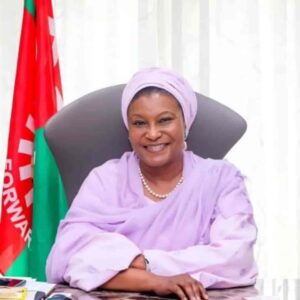







Halima Shehu Biography

Halima Shehu Biography: Age, Career, Husband, Origin, Nationality, and Net Worth

Halima Shehu Biography is one of the most talked-about names in Nigerian public service a woman who climbed from a farming village in Katsina State to the corridors of Abuja’s power, led a multi-billion-naira federal programme, and then found herself at the centre of one of Nigeria’s most explosive financial scandals. Whether you first heard her name in a Senate confirmation broadcast or during a breathless EFCC headline, there’s no denying that Halima Shehu’s story is complex, instructive, and deeply revealing about how power, ambition, and accountability intersect in modern Nigeria.

This biography covers everything you need to know about Halima Shehu her age, early life, education, banking career, political journey, husband, children, net worth, and the controversies that defined her public life. Let’s dig in.

Quick Facts: Halima Shehu Biography Profile at a Glance

Detail Information
Full Name Halima Shehu
Date of Birth March 12, 1978
Age (2026) 48 years old
Place of Birth Kafin Dagi, Katsina State, Nigeria
State of Origin Katsina State
Nationality Nigerian
Religion Islam
Education Ahmadu Bello University, Zaria
Occupation Politician, Banker, Public Servant
Husband Unnamed Businessman
Children Four
Net Worth Estimated ₦500 million – ₦1 billion
Known For National Coordinator, NSIPA; CCT Programme

Early Life and Background: Where It All Began

Halima Shehu Biography

Halima Shehu was born on March 12, 1978, in the quiet village of Kafin Dagi, Katsina State, in what was then a predominantly agrarian community in Nigeria’s northwestern region. She is the third child and only daughter in her family, born to parents who were both farmers. This rural, modest background is a significant part of understanding who Halima Shehu is — a woman who did not grow up with wealth or political connections handed to her, but who carved a path through education, discipline, and ambition.

Her parents, identified publicly only as Mr. and Mrs. Shehu, raised their children in a tight-knit household where hard work was a daily practice, not a slogan. Halima Shehu grew up watching her parents till the land, a reality that may have quietly fueled her later dedication to social investment programmes designed to lift Nigeria’s poorest citizens out of poverty.

Katsina State itself is one of Nigeria’s most historically significant states — the birthplace of former President Muhammadu Buhari and a region where the values of discipline, Islamic education, and communal service are deeply embedded in daily life. Growing up in this environment shaped Halima Shehu’s worldview in ways that would later define her career choices.

Education: Building the Foundation

Halima Shehu Biography academic journey reflects the structured path of a woman determined to exceed the expectations that Nigerian society often places on daughters from rural farming families.

Primary and Secondary Education

She began her formal education in Kafin Dagi, where she obtained her First School Leaving Certificate. Recognising her potential, she was enrolled in Federal Government College, Kaduna State, a prestigious secondary institution where she earned her West African Senior School Certificate (WASSCE). Federal Government Colleges in Nigeria are known for their high academic standards and competitive environments attending one was an early signal of Halima Shehu’s intellectual capability.

University Education

Halima Shehu proceeded to the prestigious Ahmadu Bello University (ABU), Zaria, in Kaduna State — one of Nigeria’s oldest and most respected federal universities, founded in 1962. There, she majored in English Language, graduating in 1999 with a Bachelor of Arts degree.

But she didn’t stop there. In a move that would distinguish her from many of her contemporaries, Halima Shehu returned to ABU Zaria to pursue a Master’s degree in International Affairs and Diplomacy. This postgraduate qualification gave her a sharp analytical lens through which to view governance, geopolitics, and public policy skills that would serve her enormously in her later career in public service.

Her combined academic profile English Language at the undergraduate level and International Affairs at the postgraduate level made Halima Shehu a rare blend of communicator, policy thinker, and strategic planner. It is this combination that helps explain how she moved seamlessly between banking and government work.

Banking Career: The Quiet Years That Built Her

Before Halima Shehu became a household name in Nigerian politics, she spent nearly a decade and a half in the banking sector, where she built a reputation for precision, speed, and problem-solving.

Entry Into Banking

After completing her education, Halima Shehu entered Nigeria’s banking industry, working in what was then one of the country’s most dynamic and reform-oriented sectors. The early-to-mid 2000s were years of massive transformation in Nigerian banking the CBN’s consolidation exercises reshaped the sector, and professionals who could navigate change were highly prized.

Key Responsibilities

During her banking career, Halima Shehu worked in roles that brought her into regular contact with the Central Bank of Nigeria (CBN) and the Nigeria Inter-Bank Settlement System (NIBSS). Her specific responsibilities included resolving issues and disputes arising from banking and clearing processes work that required meticulous attention to detail and an ability to manage high-stakes situations calmly.

Colleagues and supervisors reportedly commended Halima Shehu for three qualities in particular: accuracy, speed, and problem-solving. These are not trivial traits in a banking environment where errors can cascade into systemic failures. Her ability to consistently deliver under pressure earned her a solid professional reputation during these years.

Departure From Banking

Halima Shehu left the banking sector in 2014, a decision she made consciously to pursue what she described as a deeper passion politics and public service. This was not an impulsive move. It was the kind of deliberate career pivot that happens when someone has spent years building skills and is now ready to apply them in a larger arena.

Her banking background particularly her expertise in digital financial systems and transaction oversight would prove invaluable in her subsequent government roles, especially in digitising the Conditional Cash Transfer programme.

Political Career: From Katsina to Abuja

Halima Shehu’s political career is a story of setbacks, reinvention, and ultimately, high-profile appointment at the national level.

2015 House of Representatives Bid

After joining the People’s Democratic Party (PDP), Halima Shehu threw her hat into the ring for the House of Representatives seat representing Katsina Central Constituency in the 2015 general elections. Her campaign platform centred on three pillars: youth empowerment, women’s inclusion, and social development themes that aligned closely with her personal story as a woman from a rural background who had succeeded through education and hard work.

She lost that election to the incumbent, Aminu Ashiru, of the All Progressives Congress (APC). It was a bruising defeat, but Halima Shehu responded the way resilient people do she did not disappear from public life.

Senior Special Assistant, Katsina State

In 2016, Halima Shehu was appointed as a Senior Special Assistant to former Governor of Katsina State, Ibrahim Shema. This role placed her inside the machinery of state government, giving her direct exposure to how policy decisions are made, implemented, and communicated at the sub-national level.

National Coordinator, Conditional Cash Transfer (CCT) Programme

The appointment that would define the next chapter of Halima Shehu’s public life came in 2019 when she was named National Coordinator of the Conditional Cash Transfer (CCT) Programme under the administration of President Muhammadu Buhari. The CCT programme is a cornerstone of Nigeria’s National Social Investment Programme (NSIP), designed to transfer cash to the country’s poorest and most vulnerable households while conditioning that support on measurable improvements in health and education outcomes.

This was Halima Shehu’s opportunity to prove that her banking expertise could translate into government effectiveness. And by most accounts, she delivered. She spearheaded the digitisation of the CCT programme, moving processes from paper-based systems to digital platforms — a transformation that improved the efficiency, transparency, and accountability of payments reaching beneficiaries. Under her watch, the programme expanded its reach to over 10 million beneficiaries across all 36 states and the FCT.

Halima Shehu herself called the digitisation of the CCT programme her biggest professional achievement a reasonable claim for someone who helped modernise a social safety net that touched millions of Nigerian households.

Senate Confirmation as NSIPA National Coordinator (2023)

In October 2023, Halima Shehu was nominated by President Muhammadu Buhari and subsequently confirmed by the Nigerian Senate as the National Coordinator and Chief Executive Officer of the National Social Investment Programme Agency (NSIPA). She was confirmed alongside two other appointees Ola Olukoyede as EFCC Chairman and Muhammad Hammajoda as EFCC Secretary in a Senate session in Abuja.

Her confirmation was widely seen as recognition of her years of work in the social investment space. NSIPA is not a small responsibility it oversees Nigeria’s flagship poverty alleviation interventions, including the N-POWER programme, the Government Enterprise and Empowerment Programme (GEEP), the Home Grown School Feeding Programme, and the CCT programme.

The NSIPA Scandal: Suspension, EFCC Arrest, and Controversy

Just when Halima Shehu’s career seemed to have reached its peak, everything unravelled with devastating speed.

Suspension by President Tinubu

On January 2, 2024 barely three months after her Senate confirmation — President Bola Tinubu authorised the immediate suspension and investigation of Halima Shehu as NSIPA’s National Coordinator. The reason cited was alleged financial misconduct and malfeasance. Dr. Akindele Egbuwalo, the National N-POWER Programme Manager, was appointed acting NC/CEO while the investigation proceeded.

The suspension sent shockwaves through Nigeria’s governance circles. It had been unusual enough to confirm someone and then suspend them within the same quarter, but the scale of the alleged infraction made the action unavoidable.

EFCC Arrest and Interrogation

Hours after her suspension, operatives of the Economic and Financial Crimes Commission (EFCC) moved on Halima Shehu. Reports indicated she initially resisted arrest for several hours. She was eventually picked up at approximately 8pm on the night of January 2, with her home and office searched before she was taken to EFCC headquarters in Jabi, Abuja, arriving around 9pm.

The allegations were staggering: Halima Shehu was linked to the alleged movement of approximately ₦44 billion from NSIPA’s accounts into suspicious private and corporate accounts in the final days of December 2023. Separately, she was also being investigated in connection with the broader ₦37.1 billion fraud probe involving the Ministry of Humanitarian Affairs, Disaster Management, and Social Development under former Minister Sadiya Umar-Farouk.

The EFCC confirmed to the News Agency of Nigeria (NAN) that she had been released after initial interrogation but was mandated to report to the commission’s headquarters daily as investigations continued.

Halima Shehu’s Denial

Halima Shehu came out fighting. On her official X (Twitter) account, she issued a firm denial, rejecting media reports that claimed she had confessed to the alleged theft. She denied any admission of guilt and threatened legal action against outlets that published what she called false and defamatory accounts. Her position was that the narrative of a “confession” was a social media fabrication with no basis in any official EFCC statement.

As of late 2025, no official government statement had fully clarified the final status of the allegations against Halima Shehu, and the investigation appeared ongoing. No formal charges had been publicly announced in court at the time of writing.

Personal Life: Husband, Children, and Family

Away from the cameras and courtrooms, Halima Shehu is, by all accounts, a devoted family woman. She is married to a prosperous businessman whose name has been kept away from public scrutiny a common choice for spouses of Nigerian public officials who prefer to maintain their privacy. The couple has four children together.

Despite the intense public pressure that came with her career — especially during the NSIPA controversy Halima Shehu has consistently kept her family details out of the headlines. This protective instinct around her personal life says something about the woman behind the official title: someone who, regardless of the storms around her, tries to maintain a zone of normalcy for her children and husband.

Her faith as a Muslim woman from Katsina State is also central to her identity. She is known to her community as Hajiya Halima Shehu, the honorific “Hajiya” indicating that she has completed the Islamic pilgrimage to Mecca (Hajj) a significant spiritual and social milestone in northern Nigerian Muslim society.

Nationality and State of Origin

Halima Shehu is Nigerian by birth and citizenship. Her state of origin is Katsina State, located in Nigeria’s Northwestern geopolitical zone. Katsina is a historically significant state — it was once the seat of one of the great Hausa kingdoms and remains an important cultural and political hub in northern Nigeria.

Her identity as a Katsina native was significant in her career, particularly during the Buhari administration, as the former president himself hails from Katsina State. This shared origin may have played a role in the network of relationships that eventually led to Halima Shehu’s appointment to national positions.

Net Worth: What Is Halima Shehu Worth?

Estimating the net worth of Nigerian public officials is always a careful exercise, as wealth declarations are rarely made public in full and lifestyle indicators can be misleading in either direction.

Based on available information, Halima Shehu’s net worth is estimated to fall in the range of ₦500 million to ₦1 billion (approximately $320,000 to $640,000 USD at current exchange rates, though significantly more in purchasing power terms within Nigeria). This estimate accounts for her career earnings from over a decade in banking, salaries and allowances from senior government positions, and assets reportedly associated with her household.

It is important to note that these figures are estimates from public observation, not verified declarations. Following the EFCC investigation, questions were raised publicly about the source of certain funds allegedly traced to accounts linked to people in her network — but since no conviction or formal charging document has been publicly confirmed, those allegations remain precisely that: allegations.

What can be said factually is that Halima Shehu built a career that, by Nigerian standards, afforded her a comfortable middle-to-upper-class life — before the NSIPA scandal put all of that under a national microscope.

Legacy and Impact: What Halima Shehu Means to Nigerian Public Life

Whatever the final legal outcome of the NSIPA investigation, Halima Shehu’s career carries lessons that go beyond one person’s story.

She is one of the relatively rare examples of a northern Nigerian woman who crossed from the private sector into national public service at the highest levels. Her work digitising the CCT programme expanding it to over 10 million beneficiaries represents a genuine policy achievement that touched real lives across Nigeria’s most underserved communities.

The NSIPA controversy, on the other hand, reflects systemic challenges that predate Halima Shehu: weak accountability structures, poorly audited government agencies, and the persistent temptation to exploit access to public funds. Whether she was the architect of the alleged fraud, a participant, or a convenient scapegoat for larger institutional failures is a question that only a thorough judicial process can properly resolve.

What is beyond dispute is that Halima Shehu represents a generation of educated Nigerian women who entered public life with genuine credentials and ambitions and that how Nigeria handles their cases will shape whether the next generation of talented women sees government service as a path worth pursuing.

Halima Shehu on Social Media

Halima Shehu maintains an active presence on X (formerly Twitter) under the handle @MrsHalimaShehu, where she has used the platform to respond to allegations, connect with the public, and share her positions during the NSIPA controversy. She has also been active on other social platforms consistent with Nigeria’s vibrant digital public discourse.

Conclusion on Halima Shehu Biography

Halima Shehu is a figure who embodies both the promise and the peril of Nigerian public service. Born in a farming village in Katsina State on March 12, 1978, she rose through disciplined education at Ahmadu Bello University, built a respected banking career, entered politics, and eventually led one of Nigeria’s most important social investment agencies. Her achievements particularly expanding the CCT programme’s digital infrastructure to reach 10 million Nigerians are genuine and substantial.

Yet the NSIPA scandal of January 2024, involving staggering allegations of financial misconduct exceeding ₦37–44 billion, cast a long shadow over everything she built. Halima Shehu denies wrongdoing, and as of the time of this writing, no conviction has been recorded. The full truth remains to be determined.

What her biography ultimately illustrates is a Nigeria in transition: a country with immense human talent, where women like Halima Shehu can rise from obscurity to national leadership, but where institutional safeguards are still being stress-tested sometimes failing in real time.

Also Read:

Frequently Asked Questions (FAQs) About Halima Shehu

1. How old is Halima Shehu and where is she from?

Halima Shehu was born on March 12, 1978, making her 48 years old as of 2026. She hails from Kafin Dagi village in Katsina State, in Nigeria’s Northwestern region. She is of Nigerian nationality and identifies strongly with her Katsina roots.

2. Who is Halima Shehu’s husband and how many children does she have?

Halima Shehu is married to a successful businessman whose name has not been made public. The couple have four children together. She is known in her community as Hajiya Halima Shehu, indicating she has performed the Islamic pilgrimage to Mecca.

3. What happened to Halima Shehu after the NSIPA scandal?

In January 2024, Halima Shehu was suspended by President Bola Tinubu and subsequently arrested and interrogated by the EFCC over allegations involving the movement of approximately ₦44 billion from NSIPA accounts and a related ₦37.1 billion fraud probe linked to the Ministry of Humanitarian Affairs. She was released on bail and ordered to report to the EFCC daily during the investigation. Halima Shehu denied all allegations, calling reports of a confession fabricated. As of 2025, the investigation was still ongoing and no formal conviction had been announced.

Harbidex https://biograph.com.ng

Harbidex is the founder and editor of Biograph.com.ng. He specializes in researching and publishing accurate biographies, net worth updates, and success stories of notable personalities from Nigeria and around the world.

You May Also Like

More From Author

+ There are no comments

Add yours